

Five Ways to Eat Sunchokes
Last year, I spent a considerable amount of time figuring out the best way to eat sunchokes. If you’re unfamiliar, sunchokes are a perennial temperate root crop native to Eastern North America. They go by many names, including Jerusalem artichoke, sunroot, topinambur, and their scientific name, helianthus tuberosus.
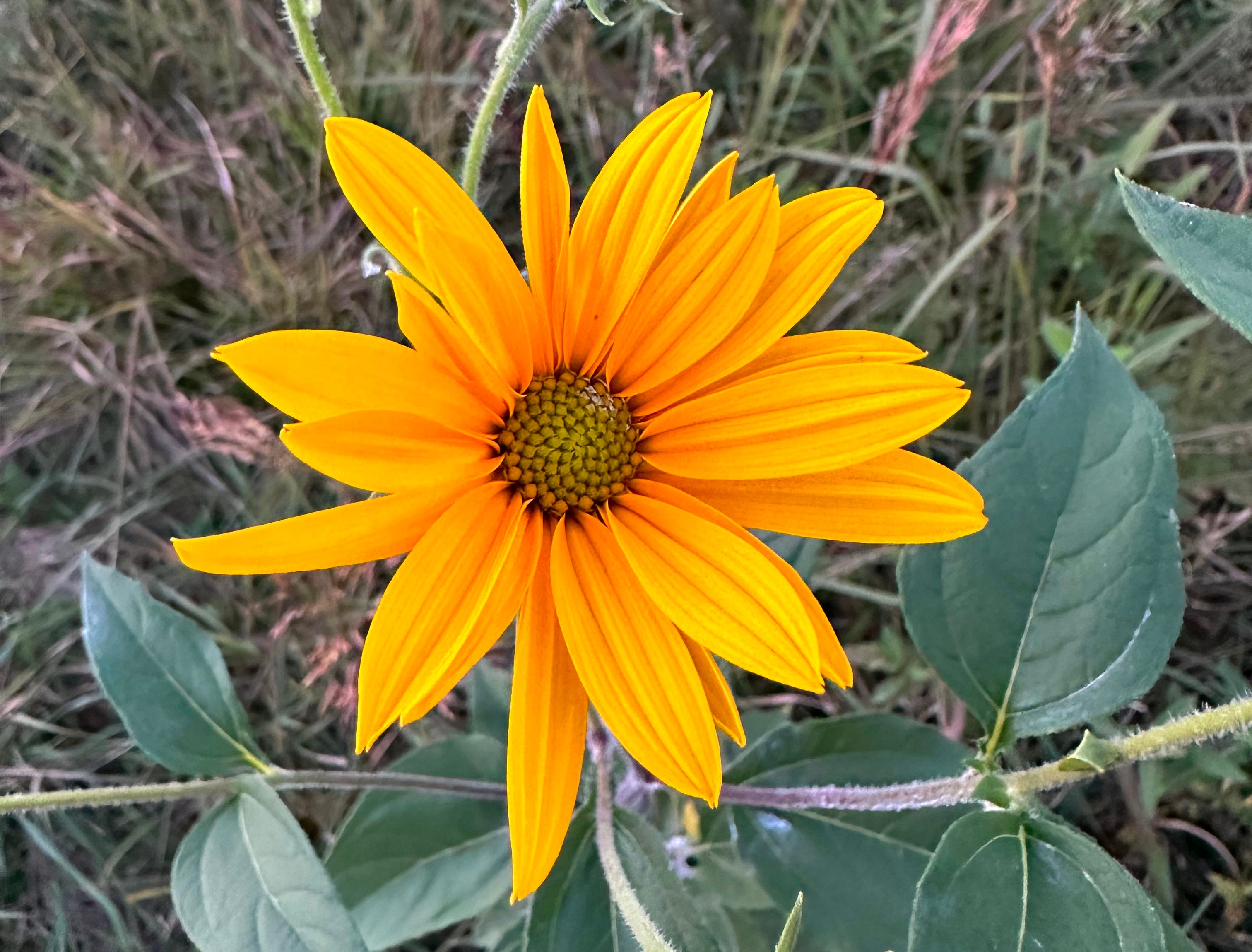
They are probably best known as Jerusalem artichokes, but I do not like this name, which was originally a mistranslation, because it doesn’t really fit the crop at all. It is neither from Jerusalem, nor is it related to artichokes. Plus, it is a root and artichokes are the heart of a flower. It just doesn’t make sense. Sunroot is a nice option, but sunchoke is a happy medium, harking back to the name it is best known by, while making more sense.
As its scientific name implies, sunchokes are in the sunflower genus (helianthus), shared by many other eastern native perennials and the annual sunflower. Sunchokes have bright yellow flowers that resemble miniature sunflowers and produce seeds that resemble tiny sunflower seeds that are equally edible. This is where the “sun” in sunchoke comes from.
Moving up the family tree, sunchokes are in the Asteraceae family. Within this family are several edible root crops, including sunchokes, yacón, dahlias, and chicory. One aspect that they all share is that energy is stored in their roots as inulin, a polysaccharide made from a long chain of fructose molecules. While inulin is made up of sugar subunits, it is not digestible by humans and does provide any direct calories. However, bacteria in the gut can break it down, consuming it in the process and releasing short chain fatty acids, which are very healthy and do provide modest caloric value, alongside serving multiple functions within the body.
It is estimated that inulin and related compounds might provide 1.5-2 calories per gram via the secondary digestion of gut microbe metabolites. Sugar provides 4 calories per gram, which is more than twice as much. The human gut is not set up to provide a substantial amount of our calories, unlike in other animals, such as cows. So even if you try to get more calories out of inulin, it is effectively capped at a low amount of our total caloric intake. Excess inulin would simply pass through the digestive tract unfermented. Gut bacteria also release gases as they consume inulin, which is why sunchokes are often associated with flatulence. Consuming too many sunchokes can quickly lead to excess gas and stomach pain.
Inulin and other gut-fermentable compounds, called prebiotic fibers, are essential nutrients for good health, providing a range of benefits by boosting gut bacteria. Increasing prebiotic fiber is one of the best dietary changes one can make for long term health. Most people who consume typical highly processed diets are chronically low in prebiotic fibers, and sunchokes are a fantastic source of them. In fact, they may be too good of a source of them.
The thing with sunchokes is, they are really easy to grow. In the right soil conditions, they will produce like crazy. And as perennials, they are also rather hard to get rid of, not that you should want to. This often leaves gardeners with too much of a good thing. In their raw state, sunchokes are nutritionally a supplement, since sunchokes are composed mostly of fiber, and you can only eat so much fiber. On the agronomic side, sunchokes grow more like a staple crop, something that gives a large portion of one’s annual calories. The trick is getting sunchokes to work as a dietary staple.
The good news is that inulin can be converted to sugar, which contributes 5-10% of our daily calories. In some cultures, sugar contributes as high as 20% of annual calories. If we could get something like 25% of our annual sugar and 50-80% of our annual prebiotic fiber from sunchokes, then it moves up into the territory of other staple crops. The trick is getting it to taste good. My work last year revolved around different ways to process sunchokes for preservation, flavor, and inulin to sugar conversion. So far, I have five standouts, with some avenues for further exploration.
Method 1: Raw Sunchokes
Raw sunchokes are great! Another less common nickname for sunchokes is earth apple, which is apt. Raw, the tubers have a very nice crunchy texture that is reminiscent of an apple, and the flavor is very mild and lightly sweet. This is the inulin talking, which, being made up of fructose molecules, is lightly sweet itself. I would not say it is sweet enough to function as a sweetener in the way that stevia does, but it is very pleasant, especially in a raw sunchoke. Nutritionally, raw sunchokes are primarily fiber with small amounts of sugar, protein, and a good helping of minerals, namely potassium. They also have a decent amount of polyphenols, which impart a mild astringency in raw tubers.
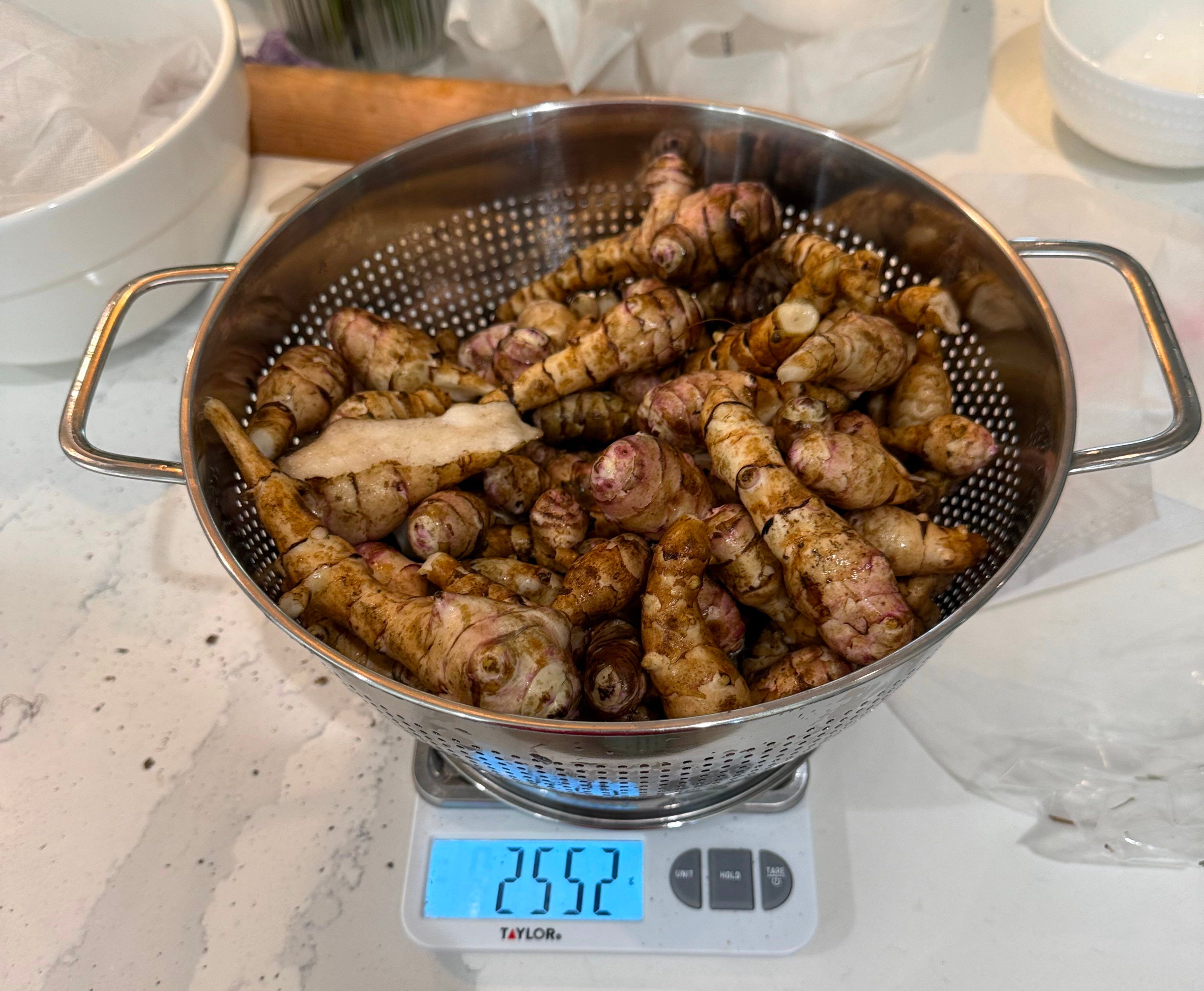
Raw sunchokes are best stored in the ground. Conveniently, they can be harvested anytime after first frost in the fall all the way until mid-spring when they sprout again, as long as the ground isn’t frozen, making them impossible to get.
Common wisdom suggests that spring harvested sunchokes are sweeter because the plant begins breaking down inulin into sugar to prepare for sprouting. I have found that this effect is not very strong.
In order to get any real information on sugar conversion, I had to be able to measure the sugar content of my sunchoke dishes. Lab testing was not going to be worth the cost, and luckily, I found out about a method which uses the Quantitative Benedict’s Reagent to measure the ‘reducing sugar’ content of a solution. Without getting too bogged down in the chemistry, a reducing sugar is a type of sugar that can be a reducing agent, which includes fructose and glucose, but importantly, does not include inulin (or smaller chain fructo-oligosaccharides, or sucrose). So basically, the Quantitative Benedict’s Reagent gave me a way to directly measure the fructose content of various sunchoke derived products at home. This is helpful because the primary product of inulin decomposition is fructose, meaning that any process that meaningfully breaks down inulin will produce fructose, which I could then measure. The chemicals involved are not exactly non-toxic, but it was all things I was able to get online or at Walmart. Still, don’t try this at home.
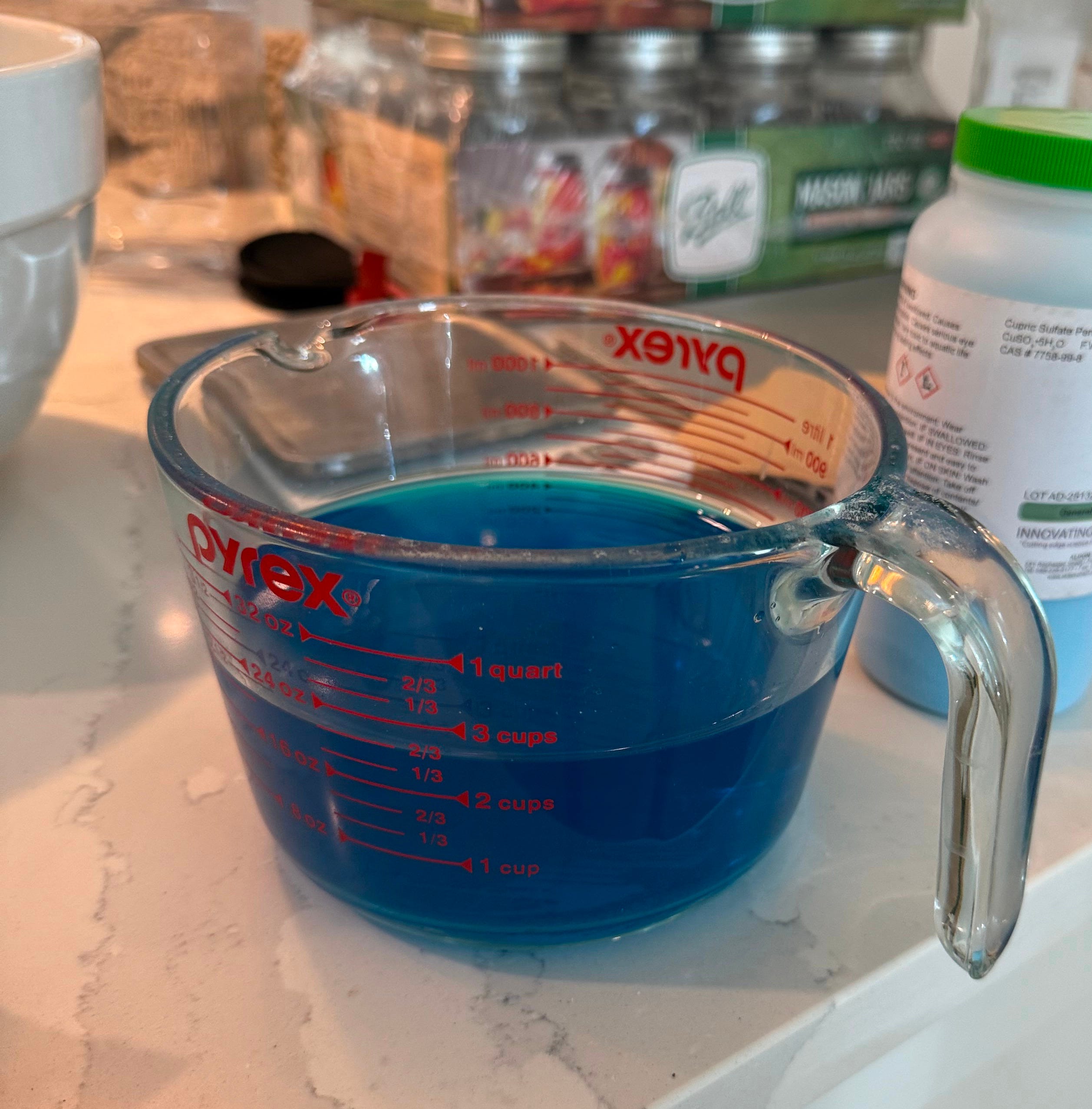
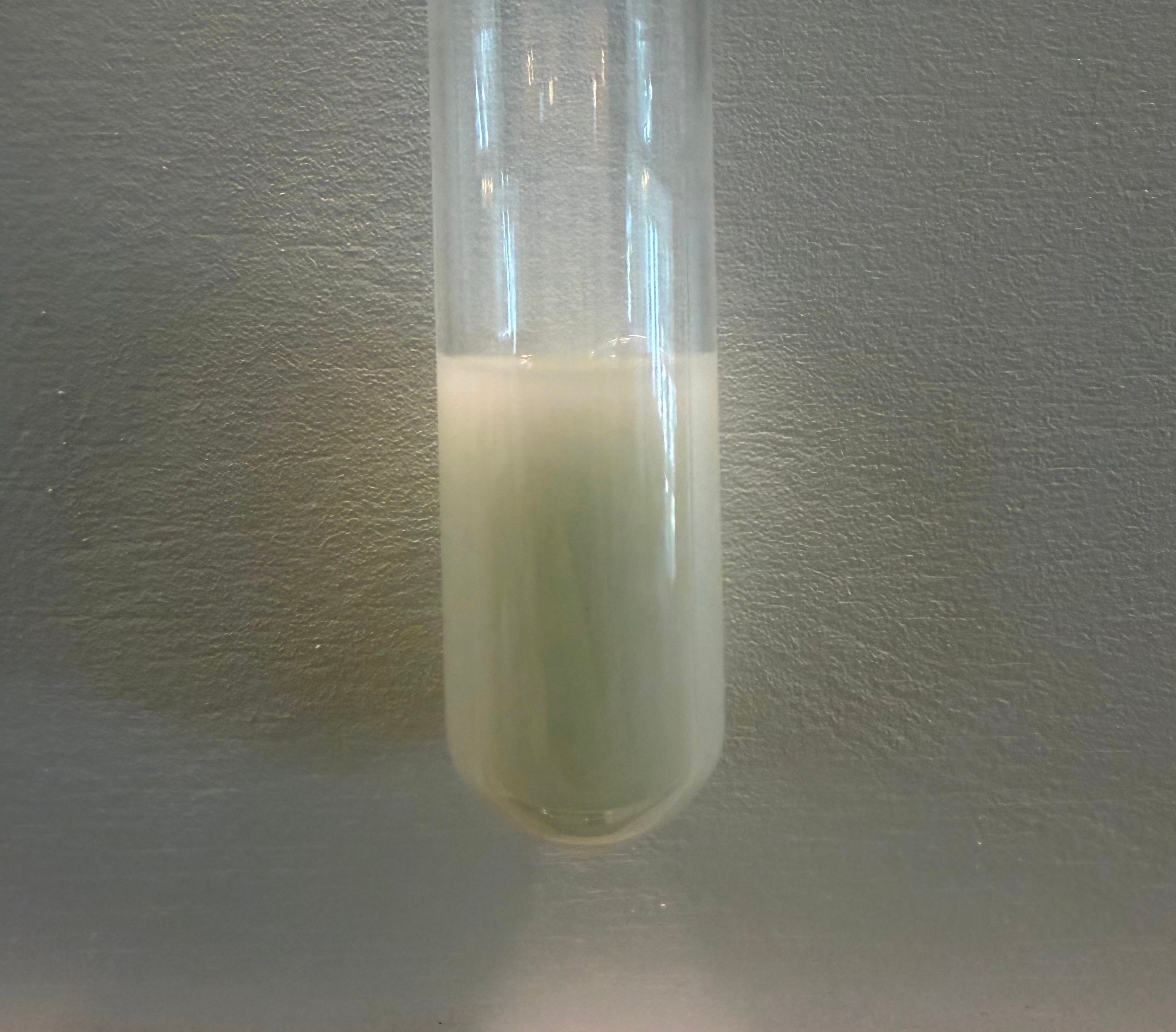
The Quantitative Benedict’s Reagent experiment has three basic steps. First you prepare the reagent, which is a toxic blue colored liquid that strongly resembles blue Gatorade. Then, you prepare a mixture of your sugary substance, diluted to have a sugar concentration within a specified range, and with additional chemicals thrown in. You may be wondering, how can you specify the sugar concentration if you don’t know how much sugar you’re starting with? You can’t, which is why you might have to repeat the experiment a few times. The third step is to slowly add your sugary mixture to a test tube of reagent in a double boil to maintain near boiling temperatures. When the mixture reaches a set sugar concentration, it will go from Gatorade blue to cloudy white. By measuring how much solution was added, you can do the backwards math to find out what concentration you started with. Viola! Sugar content measured. In chemistry, this type of measurement is called a titration.
With that pesky chemistry out of the way, we can get into the results. Now, keep in mind, this is not a professional measurement, so it’s not going to be 100% correct. It was also a time consuming measurement, so I didn’t measure the sugar content of everything I did, just enough to grasp what was happening.
Using this measurement, raw, fall-harvested sunchokes had about 3.25% of total sugar per dry weight. Unfortunately, I didn’t know I would be writing this when I measured spring harvested tubers, so I didn’t take good notes. However, when running the experiment on spring tubers, I kept overestimating the sugar content, and the final number was less than 5% of dry weight. Overall, not that different than fall tubers. So, is common wisdom wrong? My hypothesis is that it is half wrong. There is of course some sugar conversion, but I believe a lot of the work the plant is doing is breaking down the inulin chains into smaller components. Inulin is made up of an undefined number of fructose molecules, so an individual molecule can be rather large. It can be broken down into smaller components, which are often referred to as short-chain fructo-oligosaccharides once they reach 10 or fewer fructose units.
This hypothesis is supported by existing research. In 2014, researchers in Lithuania (Krivorotova and Sereikaite) measured the seasonal variations in sugar content of sunchoke tubers. They found that the degree of polymerization (DP) of fructose was highest in the fall, and lowest in the spring, when the tubers were utilizing the sugar for growing. The total fructo-oligosaccharide content ranged from ~90% in the fall to 80% in the spring, meaning that prebiotic fiber dominates the nutritional content of sunchoke tubers at all times in the harvest window. They did, however, find that sucrose content rose to around 15-20% of dry matter in the spring. Unlike fructose, sucrose is not a reducing sugar and cannot be measured using the Benedict’s reagent. This explains why I did not see a substantial boost in sugar from spring harvested tubers.
The bottom line is that spring harvested tubers have more sugar, but they are still dominated by short-chain fructo-oligosaccharides. These short-chain fructo-oligosaccharides are slightly sweeter than longer chain inulin, and they are also more fermentable in the gut, due to being broken up already. However, they still don’t provide direct calories like sugar does. To get more calories out of sunchokes, we need to do a conversion of inulin to fructose.
Method 2: Sun Sauce
My first attempt at sunchoke inulin to sugar conversion was for a syrup. It is often stated that inulin breaks down into fructose with heat, which is true. In my head, I was hoping that I could juice sunchokes, boil down the juice, and that the heat itself would convert the inulin to sugar, making a delicious maple-syrup substitute. It didn’t quite work according to that plan.
There were some details to work out when juicing sunchokes. After running them through a juicer, the juice would come out a light yellowish brown but quickly turn dark brown. After some research and back and forth, I realized that the juice browning was from the oxidation of polyphenols. As I mentioned before, sunchokes have a fair amount of polyphenols. When polyphenols are exposed to air, they will often oxidize, which is the same reason that apples turn brown when they are sliced and sit out for a while. I also learned that sunchokes have an enzyme, called polyphenol oxidase (PPO), which speeds up this browning process. Luckily, adding a tablet of vitamin C was enough to reduce the browning effect.
Sunchoke juice also has a considerable amount of protein. When you begin to boil down the juice for syrup, a cloudy precipitate forms. This is an agglomeration of proteins, polyphenols, and other compounds. To get a clear liquid base, I began filtering the precipitate out using a nut milk bag. I was hoping that this protein-rich mix could have been dried into a protein powder. Unfortunately, since polyphenols readily bind to proteins, the filtered solids are heavily browned and have an off flavor. Bound proteins also do not provide much nutrition.
As an aside, you can make sunchoke sauce without juicing them by instead slicing sunchokes nice and thin and letting the juices dissolve in hot water for about 30 minutes. This reduces the amount of protein that gets in the juice, but it’s generally more dilute, requiring longer boiling, and it doesn’t really moderate the flavor in my opinion. I still just juice’m.
I boiled down the filtered sunchoke juice until it became thick like maple syrup. At this point the color was a deep brown. This took about an hour, and I was hoping in that time the inulin would have converted to fructose. No dice. My sugar measurement showed less than 5% sugar content of dry weight. The flavor comparison to maple syrup confirmed the test results. Even heating sunchoke juice in a slow cooker for a full 28 hours only led to a total sugar content of 7% of dry weight. What gives? As it turns out, converting inulin to sugar by heat alone is a slow process.
In order to take a deeper dive into inulin conversion, I ordered some refined powdered inulin derived from chicory root. The refined inulin was a mildly sweet but otherwise flavorless white powder. One thing I immediately noticed was its propensity to absorb moisture. It would quickly melt together and harden if left exposed to air, similar to what happens with brown sugar.
With more research, I learned that with heat alone, inulin conversion to sugar can take days, with higher water content being required. My method of boiling it down fell way short. However, acid can be used to speed up the process substantially. I started with citric acid, which is a common, citrus-derived (commercially it comes from engineered yeast) acid with a mild flavor profile. I added citric acid to my pure inulin powder and mixed in water until just before the flavor was noticeable. This was at a pH of around 4.5. I then let the mix heat for about 6-12 hours in a slow cooker and then boiled it down. The resulting golden-brown syrup was sweet and delicious, with a flavor reminiscent of honey. Success! The sugar measurement confirmed my taste buds’ instinct, clocking in around 74% sugar.
Now, I only had to find a way to do this with sunchokes. If only it was that easy. The first thing I learned is that citric acid and sunchoke juice are a very bad flavor combination. The fruity notes of citric acid clash heavily with the savory/salty notes of the sunchokes. This was a reoccurring theme: sunchokes and fruit don’t go well together. So, I turned to sumac derived malic acid. I started here because sumac is another native perennial. It is often used to make a lemonade substitute, called sumac lemonade. This is because the berries accumulate acid on their surface which can be soaked off into water and sweetened, emulating the flavor profile of lemonade. Sumac-ade is a brilliant emerald red. Unfortunately, sumac has the same fruity undertones that made citric acid a bad match.
So finally, I landed on vinegar, which went far better with the overall flavor of sunchokes. Unfortunately, the second thing I learned in this process is that sunchoke juice is not a direct stand in for pure inulin. It’s got all sorts of minerals, flavor compounds, and proteins floating around which act as a pH buffer. This meant I had to add far more acid to achieve the same low pH in sunchoke juice mixtures, resulting in a much more potent acid flavor.
Boiling down this acidic sunchoke juice into a “syrup” certainly did work at converting the inulin into sugar, but it sure tasted like crap. I really didn’t enjoy it. I had several failed attempts to further purify the juice in order to reduce its buffering capacity, but I concluded that the processing needed to get an inulin powder like the one I bought involved processes and chemicals that I wasn’t comfortable doing at home. Plus, the point of this excursion was to make sunchokes more useful for people growing them, not a large food company. As an aside, learning about the various processing needed to make pure inulin, and sugar for that matter, has made me a little less eager to eat as much of those products.
So, I decided to stick with my original inulin-rich syrup and see what it could do. I would describe the flavor of sunchoke “syrup” as strong, with salty savory notes, a unique flavor that I’ve only had from sunchokes. As such, it doesn’t really work culinarily as a syrup, but it has earned its title as sun sauce. I like sun sauce, but I use it sparingly. For one, it has a strong flavor. For two, it is incredibly high in pre-biotic fiber, which will give you a wild ride if you’re not careful. One teaspoon of sun sauce has the same fiber content as about 3-4 full tubers. So, while supplies last, I would eat about 1-2 teaspoons a day.
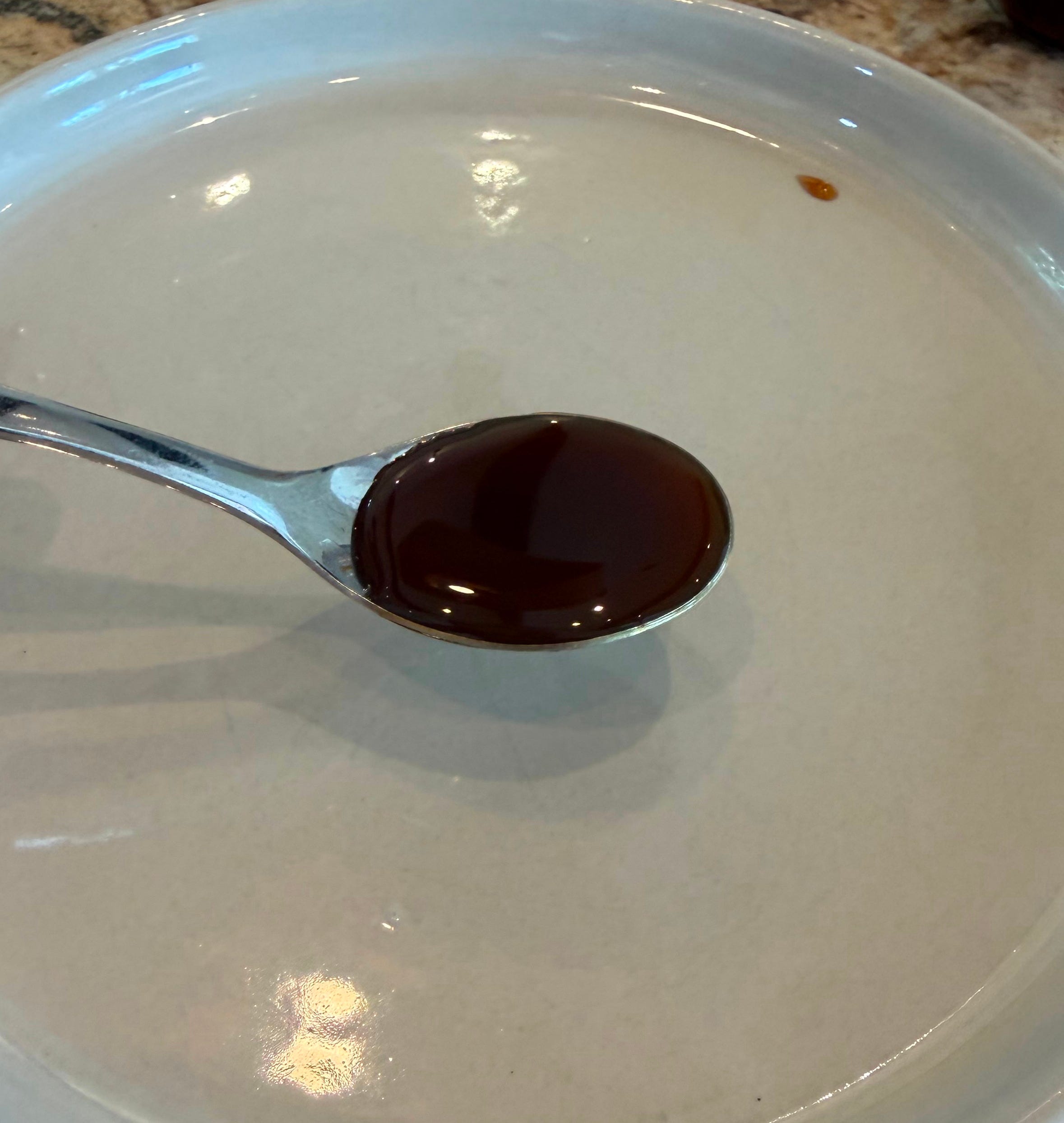
The fantastic thing about sunchoke sauce is that it stores well. I was, and am still, interested in sun sauce as a potentially value-added product from sunchokes, so I had it tested for shelf stability. I carefully measured the water content of my sunchoke batch, and got it to 29% water, which is comparable to most maple syrups. I then sent the batch to Cornell to be measured for water activity. Water activity is a measurement that determines how free the available moisture in a product is for bacterial growth. More moisture availability = more bacterial risk. The 33% moisture of typical maple syrup is below the moisture threshold in which bacteria can easily grow, which makes it shelf stable. I figured sunchoke sauce would operate the same way, and it does! The lab results came back, and my 71° Brix (29% moisture) batch of sunchoke sauce had a water activity of 0.82, well below the typical maple syrup level of 0.87. In effect, this means that sunchoke sauce can be jarred and stored the same way maple syrup is. This entails tightly sealing and sterilizing it when jarring it, and then storing it in the fridge once opened. I am currently eating my fridge-stored 4-month-old sun sauce with no ill effects. The texture is similar to maple syrup, the flavor is not.
So what exactly is sun sauce, culinarily? As I said before, it has salty savory notes that make it a poor pairing with anything fruity. It is lightly sweet, but not sweet enough to be a sweetener. Its flavor is strong, but actually very nice in the right dose. I have two basic ways I use it. The first is in creamy hot drinks, particularly black tea, coffee, or hot (choke)late. For best results, I add a nice helping of milk or nut milk (walnut or cashew milk especially), and about 1-2 teaspoons of sunchoke sauce. It’s not terrible by itself with hot milk or nut milk. I would happily drink it daily in this form, and that would cover a solid 50-100% of my daily prebiotic fiber needs (~4-5 grams of prebiotic fiber per teaspoon). Sunchoke fiber is a soluble fiber, of which the daily recommendation is 6-10 grams. More will not hurt you as long as your gut is accustomed to it.
The second use is in multi-ingredient sauces. The savory salty notes pair really well with other sauces, especially ketchup and mustard. I have even heard that sunchoke mustard is a traditional southern condiment, and I would love to find a recipe. Here, the acidity and strong flavor of the condiments tend to mask the flavor of the sun sauce. You could make ketchup or mustard from scratch, replacing sugar with sunchoke sauce in a ~3:2 ratio. If you really wanted to be efficient, you could start with sunchoke juice and get to the right moisture content manually without starting with the condensed sauce. But, if you’re lazy like me and just want to do one batch of sauce and mix later, you can mix sun sauce into ketchup or mustard at a 2:3 ratio of sun sauce to condiment, and you’ll barely notice it in there.
Method 3: Lacto-chokes
Mashed sunchoke pulp was an abundant biproduct of my sunchoke juice, and at a certain point I started throwing enough of it away that I wanted to find a way to use it. One way to use the leftover mash is to ferment it. Of course, the juice has most of the nutrients in it, so the best option is to mix the mash back in with more fresh sunchokes.
There are a few quirks with fermenting sunchokes. The first is that, being a root crop, sunchokes come with a fair amount of bacteria on their surface, and they don’t really have an easily peelable skin like potatoes. They are also quite knobby, making it easy to miss a speck of dirt when rinsing them off. As a result, most of my attempts at fermenting raw sunchokes ended in failure. More specifically, they end up smelling like puke, because butyric acid bacteria seem to love living on sunchokes, and they produce, you guessed it, butyric acid, which smells like puke. Lovely.
Now, not all butyric acid bacteria are going to kill you or anything, they are fairly common, and some are benign, but it’s best not to deal in fermentations with significant amounts of non-target organisms.
The takeaway is: always blanch your sunchokes if you’re going to ferment them. There are two basic sunchoke ferments, with one being better than the other. The first is yeast fermentation to alcohol followed by acetic acid bacteria fermentation to vinegar. You can choose to stop at the yeast step and get a sunchoke beer or keep going for vinegar. The nice thing about this ferment is that it creates the acidity to aid in sugar conversion (more on that later). Unfortunately, I’ve found this to be a difficult ferment to get right.
The problem is that inulin isn’t super digestible by yeast. So even if there is plenty of material to work with, the total alcohol production by yeast is not so high. To fix this, I’ve added sugar, which raises the alcohol level. With more time, I could probably dial in the exact amount needed to get a decent alcohol content. Without sugar, the alcohol content remains in the 1-2% range, which isn’t high enough to exclude many bacteria and makes for a weak vinegar if you go to the next step.
In terms of flavor, I wouldn’t say I’m in love. The sunchoke beer is funky. Sunchokes really do have a lot of minerals in them (which are probably great for us), but it ends up tasting somewhat like a yeasty V8 with a hint of puke (I still get the butyric acid bacteria like half the time). For now, I’ve put this ferment on the back-burner, although I’d love to get a good vinegar eventually, even if I need to add some sugar.
While it was a nice idea to include the already juiced mash into this ferment, it added to the dilute nature of the substrate for the yeast, making the low alcohol levels worse. The mash can still be included if more sugar is added. While the mash works as an addition to ferments involving a liquid product such as beer or vinegar, it doesn’t work for other ferments where the fermented sunchoke is the final product.
The better sunchoke fermentation is lactic acid bacteria fermentation, which creates pickled sunchokes. This is a classic lacto-ferment, which is pretty standard across most vegetables. In the end, you get a salty, crunchy, and slightly funky fermented sunchoke. And luckily, the lactic acid bacteria will happily eat inulin. Nutritionally, lacto-chokes have both prebiotics (inulin) and probiotics (the bacteria). Hooray!
Now, I’ve still noticed that butyric acid bacteria are quick to show up. To reduce their presence, I first blanch my whole sunchokes for about one minute, just to kill the majority of surface bacteria. Right after, I put them in cold water. The goal is to minimize any textural changes from the blanching, because lacto-chokes are best with a solid crunch to them. Note that I don’t slice my sunchokes before blanching, because inulin is soluble and you’ll lose a decent amount of it in the water when slicing.
Once you’ve blanched the sunchokes and cooled them off, slice them to your preferred pickle shape, and put them in an airlock fermenter. You’ll want to add the requisite amount of salt (look it up). Many fermentation recipes don’t mention adding in a starter, but given the high levels of bacteria living on sunchokes, I highly recommend a lactic acid bacteria starter, or to add a little bit of liquid from the last batch.
Once fully fermented, which takes several days, the lacto-chokes are crunchy, sour, and great for you. I think these are really tasty, and make a nice addition to a sandwich, charcuterie, or maybe a burger. Now in the space of the fermentation, a lot of the inulin will leach into the fermentation liquid, along with loose sugars and lactic acid, which is a very low pH. You may be thinking what I’m thinking, which is that you could convert that inulin to sugar, and you’d be right.
I did take a successful lacto-ferment and afterwards, I boiled down the juices. While I’m sure plenty of sugar was present, the dominant flavor by far was sour, owing to the large amount of lactic acid, which is not volatile, meaning it won’t boil off. There could be something there, but I’m probably not going to do it again.
Method 4: Sun Dates
Sunchokes were a staple crop for the indigenous people of Eastern North America, and they encountered the same problems I’ve described above. On its own, it’s not quite staple material because it’s not a substantial source of calories. Baking it like you would a potato does not solve the problem. As I discussed in the sun sauce section, it can take days for inulin to convert to fructose using heat alone. Despite this, you will sometimes see sunchokes served in restaurants baked or steamed and used somewhat like potatoes. I will happily order these, but I don’t think it’s an improvement on the nutrition from a raw sunchoke.
Rather than trying to get around this fact, indigenous cultures embraced it. They used a specific form of earth oven which was easy to construct and facilitated a long, low-temperature bake. I’m sure there were many intricacies to the design, but the basic premise is that they dug a conical hole in the ground, lined with a dirt barrier, and placed the raw sunchokes in the hole. On top of this pit, they raked hot coals which would maintain a long slow burn, heating the sunchokes without burning them. The result was a sweet, low moisture, sunchoke that resembles dates in texture, sweetness, and appearance. I call them sun dates for that reason. However, the flavor is something completely different, so don’t expect a fruit forward flavor. A similar process was used for the inulin rich camas roots in western north America.
Getting the moisture and texture just right in this method was a skill that must’ve taken some time to develop. Again, there are likely many intricacies with the method, I haven’t done it, but I have worked out a workaround for the standard home kitchen.
In theory, you could cook sunchokes in the oven at ~200-250 F for 24+ hours to mimic the traditional process, but who wants to leave an oven on that long? Uncovered, the sunchokes will also quickly dry out which prevents effective inulin conversion (the process needs some amount of moisture). For a long cooking process like this, a slow cooker is a much better option. Even though they won’t dry out in a slow cooker, it still makes sense to cover them within the cooker. If you don’t, the steam will slowly rinse away the inulin and sugars into the steam liquid. Again, full conversion can take 24-48 hours, and in that time, the heat can contribute some level of off flavors as other compounds in the sunchokes slowly degrade. I have a way I like better.
As mentioned above, acid greatly speeds up the conversion of inulin to sugar. The best acid for the following process is vinegar. First, you submerge and soak the sunchokes in vinegar for about 1-2 days. There is no rush to get them out because they will stay fresh in vinegar for several days. There is no need to slice them, as it will encourage inulin leaching. I prefer neutral or savory leaning vinegars for this process, like white vinegar or rice vinegar.
Once soaked, the sunchokes are at a low pH, which greatly increases the rate of inulin conversion. Now, they can go in the slow cooker for 6-12 hours (wrapped in foil or otherwise covered) to convert the inulin. The resulting sunchokes will be sugary, acidic, and high moisture. I measured the sugar content of vinegar soaked and cooked chokes to be around 60-70% dry weight, which is firmly in the sugar-dominant realm nutritionally. At this stage, they aren’t the best eating because the soft texture and acidity is a difficult combination, although maybe they’d be fine in a stew.
After this step, I like to dehydrate them. In the past I’ve used a dehydrator, although the dry heat above an oven or woodstove would suffice, especially in a wintery climate where they are typically grown. As they dehydrate, the vinegar also evaporates. This is the main reason to use vinegar over other acids. It is the only common food acid that I am aware of that is volatile enough to evaporate when doing a slow dehydration. Other common acids remain in the final product.
The resulting dried sunchokes will last indefinitely and are super sweet, without much noticeable vinegar residual. I would describe the flavor as unique and pleasant, although a bit of an acquired taste. I went in expecting something similar to dates, figs, or raisins, which they very much are not. The sunchoke specific flavor is unique and hard to compare to anything else. You should just try it. Of all the methods of eating sunchokes, this has the best potential as a caloric staple. Sun dates can be stored a room temperature for a long period of time and serve as a nice snack on the go. They can also be rehydrated in soups or stews. But, most importantly, they are 60-70% sugar, which means they have a substantial amount of calories and are not overloaded with prebiotic fiber.
Method 5: Sun(choke)chips
Of all my experiments with sunchokes, this is the one I am most proud of, but it is also the most involved. The basic concept is to create a crunchy chip, like a potato chip, but with sunchokes, while also converting the inulin to sugar. The problem is, the crunch in potatoes is mostly a reaction between the frying oil and the starch, with the moisture creating a bubbling/puffing effect. Sunchokes have no starch, but there is a workaround.
As with the previous method, the first step is to soak the sunchokes in vinegar. Once fully soaked, they need to be sliced as thin as possible. Ideally around one millimeter. Then, they go in the slow cooker, for 3-12 hours, wrapped in foil or covered within the cooker. This converts the inulin to sugar. The sequence of these steps is essential. If you slice the chokes first, then the inulin will leach into the vinegar. If you attempt to slice chokes after slow cooking, you will be met with a mushy mess. So its got to be: soak, slice, slow cook. Now, you have your sugary slices. At this stage, they usually have a little bit too much moisture. Some moisture is essential, but too much will leave you with a rubbery chip. So I’ll often dry them a little bit in the oven at low temperature as a next step.
To get the crunchiness which is the essence of a chip, we need a new ingredient: starch. It can be just about any starch. My first batch used acorn starch, which was particularly exciting, as I got to incorporate another native perennial food into the final product. All you need to do is set out a plate of starch and dip both sides of each chip in the starch. Now the chips are ready to be cooked.
There are two ways to go about this. You can bake them in the oven or deep fry them. Both worked well for me, and both required oil. You’ll want an oil that pairs nicely with the flavor of the sunchokes. I haven’t tried many oils to report on for this recipe, but sunflower oil (a sunchoke relative!) was great. For the baking method, I dipped and dripped each chip and laid it on a baking rack. I baked the chips in the oven at around 375 F until they were nice and crispy, which took around 15 minutes. I wish I could be more specific, but the optimal bake time depends on how thick or thin you slice them. This is why it is also important to aim for uniform thickness on the slices. In terms of temperature, I would go as high as feasible without hitting the smokepoint/oxidation point of your oil. This will be higher for refined oils with more MUFAs and SFAs and lower for unrefined and high PUFA oils.
The second method is to deep fry them, which uses more oil, but that oil can also be used on future batches. In this case, just chip the chips in the hot oil until they are nice and crispy.
If done right, the moisture in the sunchoke will boil off as you bake/fry, and the starch will crisp up with the oil, leaving a crispy, sweet, but very savory chip with a hint of acidity from the vinegar. I add a dusting of salt at the end. Nutritionally, these chips are well-rounded, with sugar, prebiotic fiber, starch, fat, and a little bit of protein, along with various minerals.
If someone were to industrialize this process, I think these would make a pretty great product. But they are super tasty in the home kitchen, as long as you’re happy with a bit of a project, and accept that not all of your sun(choke)chips will have the perfect crisp. Inevitably, a few will come out rubbery or soggy, but I didn’t mind too much because the flavor is fantastic. I think sun(choke)chips really hit all the right notes for a sunchoke based food, because it leans into the flavor profile in a complimentary way.
A Quick Note on Growing Sunchokes
Sunchokes are planted in the fall after they have gone dormant. They are planted around 3-6 inches deep in the soil. At Beaverkill Nursery, we’ve grown sunchokes in about 6 different soil types. Sunchokes are adaptable plants, but real success will be in the right conditions. We’ve grown them in: a loamy raised bed, rich sandy soil with good moisture, heavy soil with good moisture, heavy soil with moderate moisture, heavy sloping sloped soil with high moisture and lots of rocks, and heavy rocky shallow soil with modest moisture. They’ve come back in all of those contexts, but only some are worthwhile for food production.
In the raised bed, they have had no trouble taking over the entire bed. It’s only a good idea to grow them in a raised bed if you are content with that being the main species in the bed. Even species that can grow well with them in other contexts (such as American groundnut) get drowned out by the sunchokes in a raised bed. In this bed, where they are quite dense, they are also some of the first plants to show drought stress, which hints at their water requirements.
In the heavy soil with moderate moisture they come back each spring, but are not very vigorous, and frequently get mowed down by rabbits. In better conditions they would re-sprout, but in the heavy drier soil, they do not. Similarly, in the heavy, rocky, shallow soil, they were stunted and did not outcompete mugwort, something I’ve seen them do easily in other contexts.
In the heavy, rocky, sloping soil with high moisture, they are generally fine, but not nearly as vigorous as they could be. This soil is relatively low in fertility and they do not rise above the general herbaceous growth like they would in better contexts. I do think they are useful here to invigorate the soil biology and kick-start vegetative growth, but they won’t provide a substantial harvest.
In the heavy moist soil, they grow tall and are generally quite happy. This soil supports generally good herbaceous growth, but one caveat is that the heavy soil makes harvest slow and inefficient. I also suspect that heavy soils reduce tuber yields because they have to work harder to expand, but I haven’t measured the difference.
You may have guessed that the rich sandy soil would be the best and you’d be right. We are lucky to have a nice patch of soil right by a river, with sandy floodplain soil and not too many rocks. In this soil, sunchokes go absolutely wild, even with no fertilization. They will get 6-10 feet tall, flower profusely and produce a very nice yield of tubers which is easy to dig out in the soft soil. Our first year on this site, there was no deer fence, and they were heavily browsed, but despite that, they came back strong, albeit stunted. We didn’t get a huge yield that year, but they can tolerate some browsing in the places where they are happiest. The rabbits didn’t give any trouble either. With a deer fence, they are very productive.
In time, we may be able to breed high sugar varieties of sunchokes, that reach more than 50% sugar by dry weight without processing. However, I do think that there must be something advantageous about storing energy as inulin rather than pure sugar. It has reappeared many times as a strategy in the Aster family, and I would hate to breed sunchokes to be less robust, because they are one of the most robust and productive plants we grow. While high sugar sunchokes are definitely of interest, I think it is worth working with the beautiful and productive plants that we already have.
We are offering a few different varieties of sunchoke for sale this fall, which you can check out on our website. Our main variety is a standard, high yielding, white variety that’s done well for us for several years. We also have a smaller number of seed grown sunchokes, which maintain a higher degree of genetic diversity and will produce true seeds. Growing sunchokes from true seeds is easy, they can be planted just like sunflowers. We also have several varieties in the pipeline for future years, including a variety bred in China for smooth tubers that do not hold as much dirt.
I love sunchokes, I hope this helps you enjoy them more.
Further reading:
http://www.nomadseed.com/2017/11/sunroot-sunchoke-or-jerusalem-artichoke-helianthus-tuberosus/